

🕯️ Cellular Jail: The Dark Heart of Kala Pani
By Neelamani Sutar
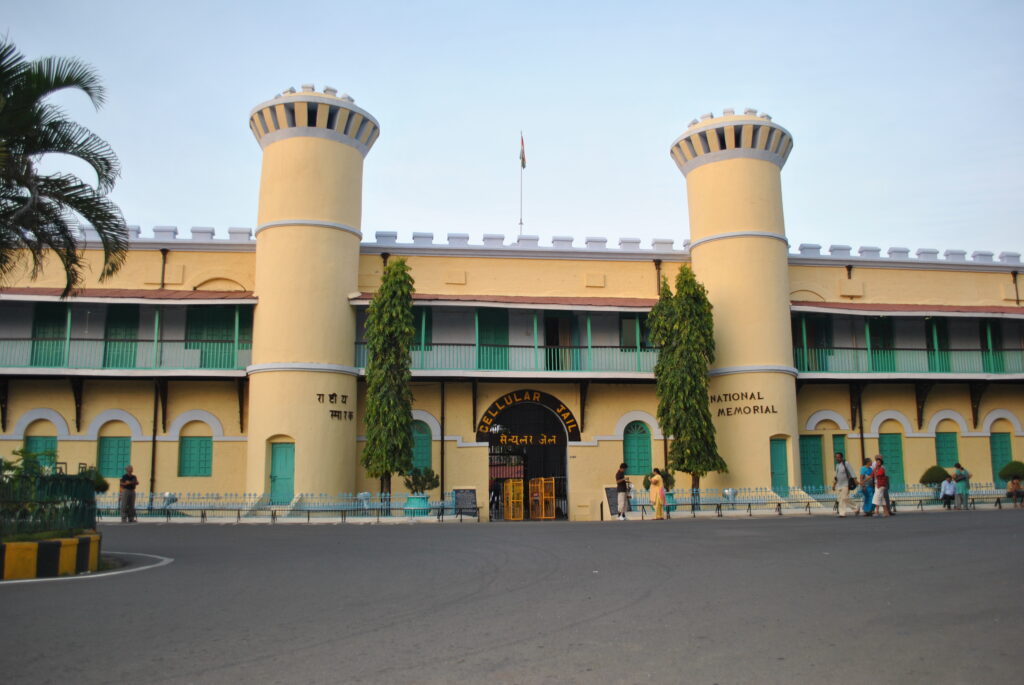
There are places we visit for their beauty — and then there are places that stare back at us with stories too heavy to forget.
The Cellular Jail in Andaman & Nicobar Islands, once known as the dreaded Kala Pani, belongs to the second kind. Step inside, and you don’t just see history — you feel it breathing through the walls.
A Jail That Was a Jail Inside Itself
The Cellular Jail was not just a prison.
It was a punishment inside punishment.
Imagine:
- You’re cut off from the mainland
- You’re locked inside a cell
- And even inside the jail, there are darker corners… where even the guards feared going.
Each cell was 13.5 × 7 ft — just enough for a man to stand, sleep, suffer.
No windows. Only a small ventilator placed so high that sunlight entered like a stranger.
It wasn’t called “Cellular” without reason — every prisoner lived in complete isolation, unable to see or talk to anyone.
The jail itself was a prison…
But each cell was a jail of its own.
The Mystery of Kala Pani
Why Kala Pani? Why “black waters”?
Local legends whisper something darker.
The sea around the island was believed to break a person’s identity — crossing it meant losing caste, losing family, losing one’s place in society.
“Kala Pani” didn’t just punish your body.
It erased your past.
And the British used that fear as a weapon.
The Tortures Nobody Spoke About
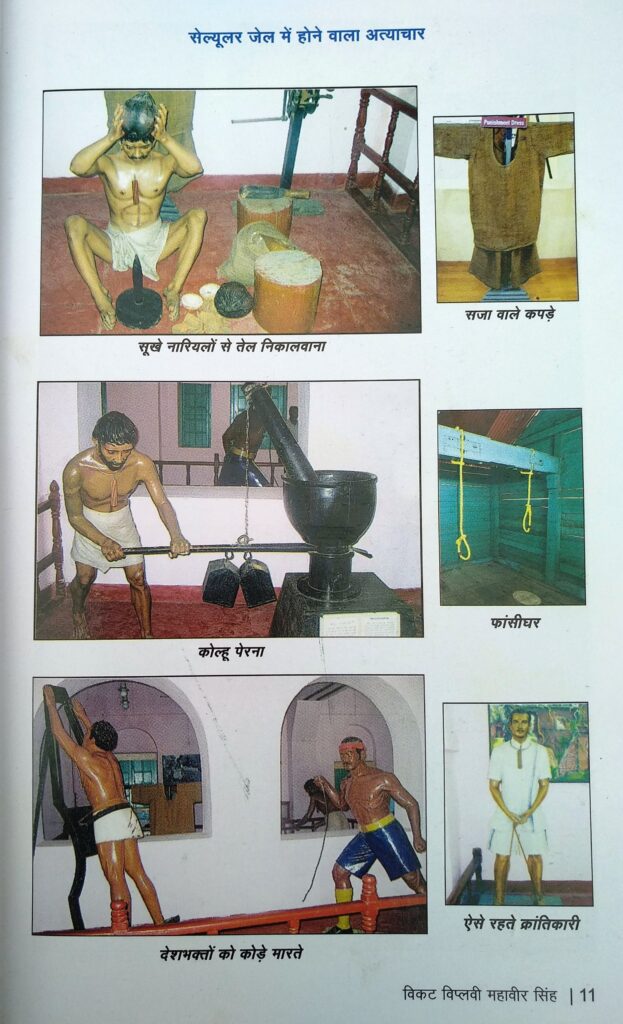
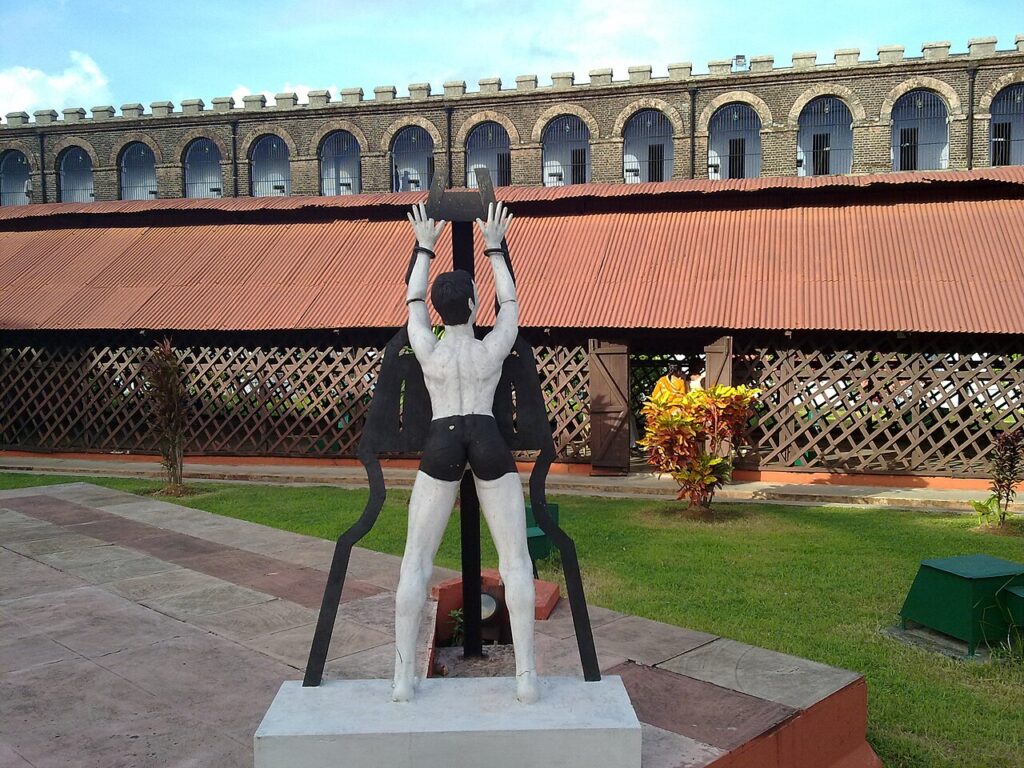
Inside these walls, cruelty wasn’t the exception — it was the rule.
- Prisoners tied to massive oil mills
- Whipped until they collapsed
- Forced to grind coconut oil for 12–14 hours
- Given half-rotten rice “khichdi”
- Chained, starved, humiliated
Some were tortured until they forgot how to speak.
Some never saw the sky again.
There are corners of the jail where sound disappears strangely — people claim it’s the echo of pain absorbed over a century.
Visitors still say they feel a heaviness in the air, as if someone unseen is walking right beside them.
Is it imagination?
Or memories refusing to fade?
Freedom Fighters Who Walked These Corridors
The moment you walk through the long, empty hallways, you remember the names:
- Veer Savarkar
- Barindra Kumar Ghose
- Ullaskar Dutt
- Batukeshwar Dutt
- Fazl-e-Haq Khairabadi
Young men, poets, dreamers — turned prisoners of the world’s most feared jail.
They fought for India’s freedom…
And paid for it with their silence.
The Jail That Could Not Kill Hope
Look up from the courtyard and you’ll see the long “spokes” of the jail — the original structure had seven wings, like a massive starfish built to crush hope from every direction.
But hope didn’t die.
In the silence of those cells, these fighters wrote poems on the walls with stones.
They sang softly after the guards left.
They passed messages through coughs, knocks, and coded sounds.
A place built to break them… ended up making them immortal.
🕯️ Visiting Cellular Jail Today
If you walk there today, you’ll feel two things:
- Pain that touches your bones
- Pride that fills your heart
The light-and-sound show in the evening makes the walls speak.
Literally.
Voices echo stories of those who suffered… and those who rose again.
This is not just a monument.
It is a reminder — of what freedom cost.
✒️ Final Words
Standing inside Cellular Jail, you don’t feel like a tourist.
You feel like a witness.
Witness to courage, cruelty, sacrifice…
and a mystery that still lingers in the air.
Some places tell stories.
Kala Pani whispers them.
Slowly.
In the dark.
And once you hear them, they stay inside you forever.
Very good Post!